Oxygen Remote Explorer v.2.1 is here. Key features include:
- macOS-compatible version of Remote Device Collector
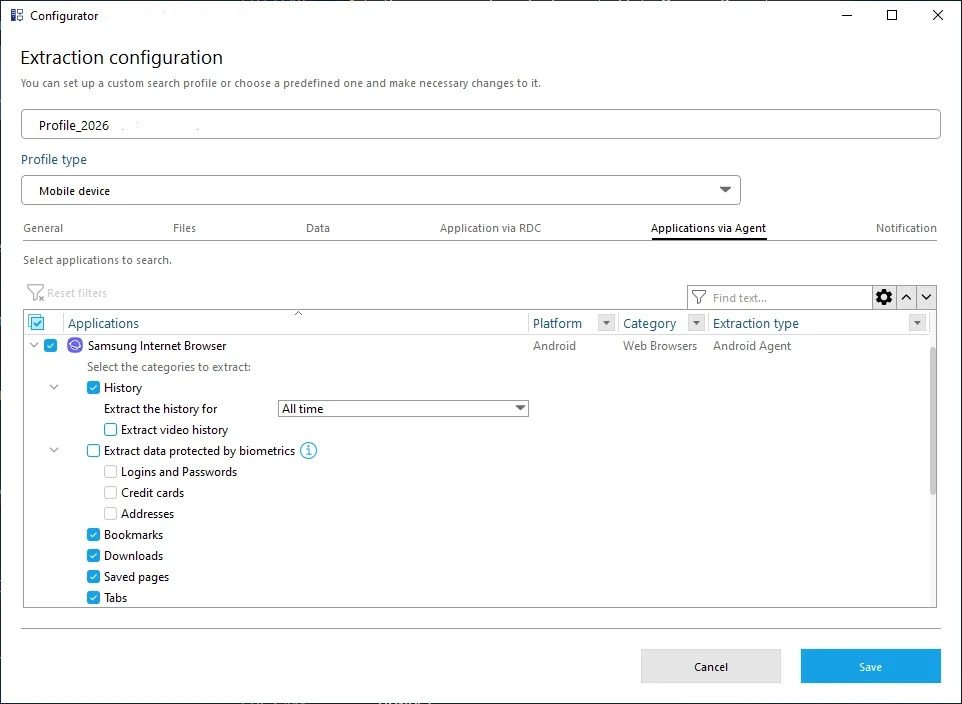
- Remote Samsung Browser data collection via Remote Android Agent
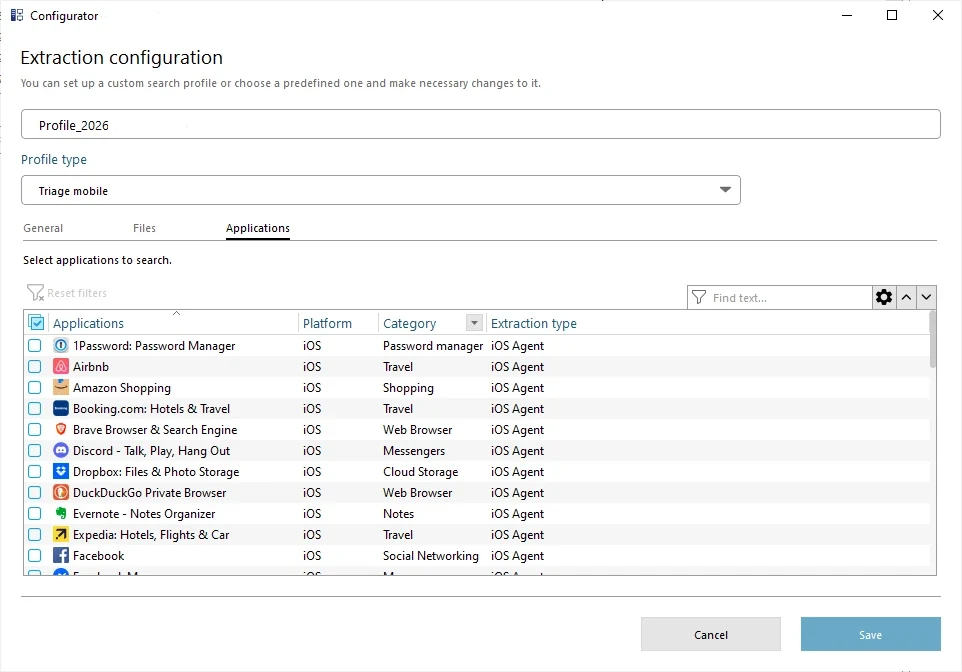
- Remote application triage via Remote iOS Agent
- Expanded API-based administrative capabilities
- Support for Microsoft SharePoint data collection
For a full list of updates, refer to the “What’s New” file in the “Options” menu.
Agent Management Center Updates
macOS-compatible version of Remote Device Collector
We have introduced a macOS-compatible version of Remote Device Collector, expanding support for the macOS ecosystem. This enhancement allows enterprises and service providers to acquire iOS data directly on macOS workstations without relying on Windows infrastructure. The macOS version installs directly from the Agent Management Center via the context menu and enables iOS device connection, registration, and the launching of data collection tasks.
Remote Samsung Internet Browser data collection via Remote Android Agent
We have added the ability to remotely collect Samsung Internet Browser data from Android devices using the Remote Android Agent. This option is available under the Applications via Agent tab in the Profile Configuration Window. The collected dataset includes addresses, bookmarks, credit cards, logins and passwords, history, and more. Collected data can be seamlessly exported to Oxygen Remote Explorer for comprehensive analysis.
Other enhancements
Several additional features have been added to the Remote Android Agent:
- Ability to reconfigure the Remote Android Agent via a downloadable QR code
- Ability to collect data on the current location of an Android device
Remote application triage on iOS devices via Remote iOS Agent
We have added the ability to perform installed application triage on iOS devices connected via the Remote iOS Agent, without requiring full data collection. To use this feature, select Triage mobile from the profile types in the Configurator, then open the Applications tab and choose the target applications to search for. Once triage is complete, brief statistics showing the number of searched and matched applications are displayed in the side panel. The full triage report can be downloaded from the Agent Management Center in .CSV, .JSON, .PDF, or .XLSX formats.
Expanded scope of API-based administrative capabilities
We have significantly expanded the scope of capabilities for interacting with the server via API. The updated API now supports the following administrative operations:
- Retrieving and editing endpoint properties
- Creating, removing, and editing groups
- Retrieving hash set lists and retrieving details of a specific hash set by ID
- Creating, removing, and editing users
- Getting lists of agents as files, updating agents, and editing their descriptions
Computer Artifacts Updates
Malware scan
We have implemented the ability to scan disk images and physical drives for malware in KeyScout. There are two usage scenarios:
- Select a corresponding checkbox on the General tab of KeyScout Profile settings. Files containing threats will be flagged among the other collected files.
- Select the corresponding search condition on the Files tab of KeyScout Profile settings. In this case only files containing threats will be found and displayed.
Other enhancements
Several other functionality enhancements have been added:
- Search for PNG files by file signature
- Calculation of SHA3-256 hashes for disk images
- Ability to specify investigator and collection details in the new Case Details tab
- Decryption of Microsoft Account data for Windows Hello accounts
New artifacts
The following new computer artifacts are supported for collection:
- Event logs of the atop utility from GNU/Linux
- Voice Memos data from macOS
- Zoom Workplace data from GNU/Linux
- Obsidian data from Windows, macOS, and GNU/Linux
- Program Compatibility Assistant data from Windows
Cloud Forensic Updates
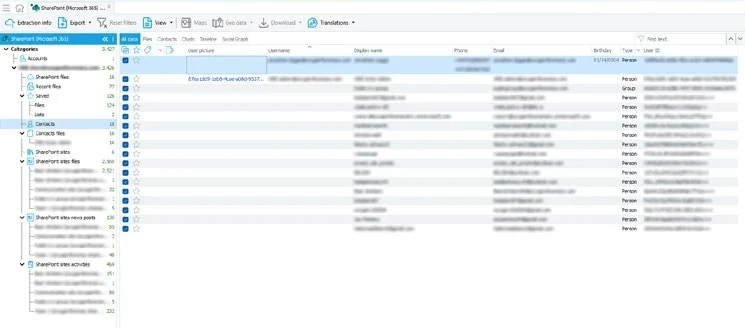
Support for Microsoft SharePoint data collection
It is now possible to collect data from the enterprise version of Microsoft SharePoint (Microsoft 365) using either MS365 enterprise account credentials or an access token. The parsed data includes:
- Account owner information
- SharePoint files
- Recent files
- Saved lists and files
- Contacts and contact files
- SharePoint sites (including files, news posts, and activities)
Data collection from Google Authenticator
You can now collect data from Google Authenticator using a login and password or token. The collected data will include the account owner’s details and secret keys.
Brute Force Module Updates
We have incorporated the following improvements to the module:
- We have added the ability to brute-force passwords for encrypted Samsung Smart Switch backups.
- Attacks are now automatically paused when the user-defined critical GPU temperature is reached, and a corresponding notification is displayed in the attack window.
- We have improved the brute-force algorithm for Android FDE images.
- We have improved the ability to utilize multiple GPUs simultaneously to brute-force passwords on Android FDE and FBE images.
Mobile Forensic Updates
Enhancements of the iOS Agent public data method
We have incorporated several enhancements into the iOS Agent functionality for collecting publicly available data:
- Added the ability to manually select and collect exported chats from WhatsApp and WhatsApp Business. Chats can be exported either with media files or without them. All iOS devices running iOS 15.1 and later are supported.
- Added the ability to manually select and collect files and folders. In a single request, you can download files from one folder or an entire folder at once. All iOS devices running iOS 12.0 and later are supported.
- Added functionality for collecting reminders and wireless connections data. All iOS devices running iOS 12.0 and later are supported.
General Updates
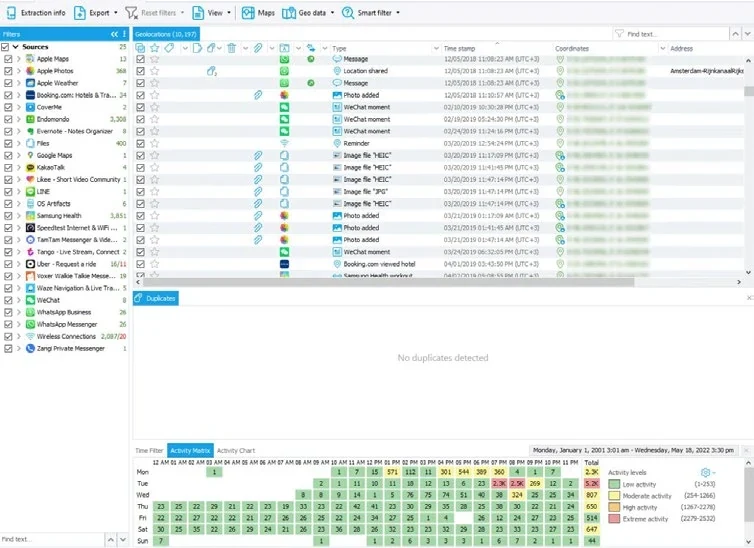
Geolocations section
We’ve introduced a new Geolocations data section that allows you to analyze all location-related information in one place. The data can be filtered using different criteria, including accounts, groups, contacts, and sources. You can also retrieve addresses from geographic coordinates. Additionally, each geolocation now includes a map preview on the Details side panel. Lastly, Geolocations coordinates collected from media file metadata are automatically labeled as the device owner’s geodata when the files are stored in standard media directories within the extraction.
Key Evidence enhancements
We have added the ability to mark all messages of a selected contact as Key Evidence. Two new options have been added to the contact’s context menu in the Contacts section: mark communication as Key Evidence and unmark communication as Key Evidence.
File-to-app linking
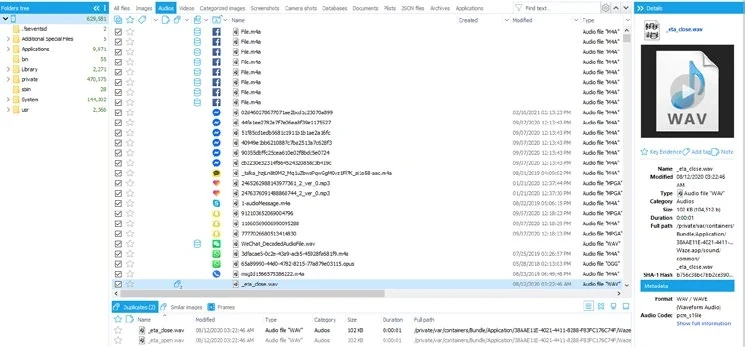
Files are now automatically linked to their source application records for easier tracing and context. In the Files section, an Application column has been added. It displays the application icon if the given file is present in that application. A link to the application is displayed in the sidebar. When you click the link, you are redirected to the application section.
Other updates
We have introduced other general features across the software:
- Added the ability to filter files and exclude system files for saving in OFBR format
- Implemented tag separation by origin into User tags and Image Categorization tags
- Added a new Coordinates column with a pop-up filter in the Messages section
- Added new filters to the Advanced Search settings in the Search section
- Added cryptocurrency search at data import
- Added the ability to translate data from Burmese, Kannada, Khmer, Malayalam, Marathi, Mongolian, Odia, Somali, and Tagalog languages.
Interested in finding out more about Oxygen Remote Explorer? Schedule a demo.